
Summary
Demand generation and lead generation are two crucial pillars of a business’s overall growth. However, many B2B firms use them as replacement strategies, even though they serve distinct, specific purposes. Understanding what these strategies do, where they fit in the sales journey, and how to use them together is important to drive sustainable pipeline growth.
Building a brand’s credibility and visibility and generating interest among prospects are part of demand generation. Actively engaging interested prospects who fall under the defined ICP through strategies such as multichannel prospecting, cold calling, and email reachouts is lead generation. Businesses that blend these together are better aligned to succeed in the long run.
Introduction
One of the most common misconceptions we see in modern B2B sales and marketing is treating demand generation and lead generation as the same strategy.
Even though both of these work closely together, their roles in pipeline generation are entirely different. While B2B demand generation services focus on building brand awareness and creating interest, lead generation converts that interest into measurable business opportunities.
Businesses that fail to understand this difference often struggle to generate interest, spark conversations, and maintain a healthy sales pipeline. So, what exactly makes demand generation and lead generation different? And how can you leverage both together to drive growth? Let’s break it down.
What is Demand Generation?
Demand generation refers to the process of building brand awareness and credibility, and igniting buyer interest in your products or services. Unlike direct lead generation campaigns, demand generation focuses on educating and informing buyers, thereby increasing brand visibility.
A lot of times, B2B businesses expect immediate results through conversions from their demand generation efforts, and that’s exactly where the confusion begins. Demand generation campaigns are not designed for short-term lead generation; instead, their goal is to put your brand in front of the right audience that eventually impacts the buying decision.
Over the years, one pattern has become increasingly clear: demand generation plays a bigger role in enterprise sales than many businesses initially realize. This is because modern buyers:
- Research strategic partners independently first
- Compare multiple solution providers over time
- Consume content across several channels
- Involve multiple stakeholders in decision-making
- Take longer to move through the sales funnel
A strong demand generation strategy usually includes activities such as:
- Informational and educational content marketing
- Webinars and virtual events
- LinkedIn Thought Leadership
- Industry-focused campaigns
- Brand awareness initiatives
- Multi-channel engagement campaigns
What is Lead Generation?
While demand generation focuses on creating awareness and interest, lead generation takes it a step forward by engaging and converting interested prospects into potential customers.
Lead generation captures prospects at a stage beyond discovery. They are at the stage where the problem exists, and you offer them the right solution by being the right strategic partner. This is where a structured B2B lead generation strategy comes in.
The goal here is to find the right prospects that match your ICP, understand their biggest pain points, align them with your offerings, and engage them with a personalized pitch to move them further down the sales funnel. The primary goals of lead generation include:
- Generating genuine sales opportunities
- Building the sales pipeline
- Supporting SDR and sales teams
- Converting buyer interest into conversations
- Creating measurable revenue opportunities
A successful lead generation strategy generally includes:
- Defining ICP
- SDR outreach
- Multichannel engagement
- Appointment setting
- Sales follow-ups
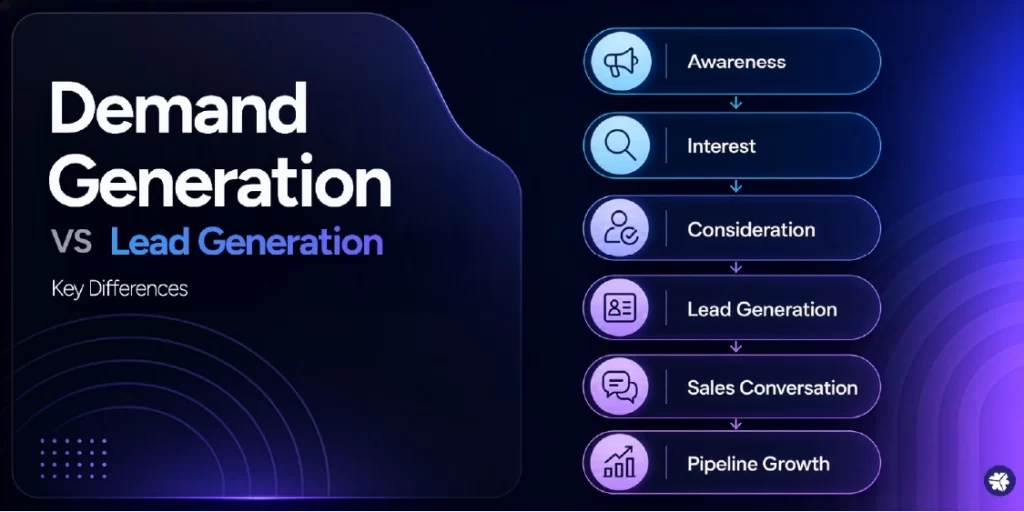
Demand Generation vs Lead Generation: Key Differences
Now that we understand both concepts individually, let’s address the question most B2B leaders are actually asking: what makes demand generation different from lead generation? The best way to understand this is by comparing them side by side:
| Area | Demand Generation | Lead Generation |
|---|---|---|
| Primary Goal | Create interest and brand awareness | Capture buyer interest and convert prospects |
| Focus | Educate and inform buyers | Generate sales-ready opportunities |
| Buyer Journey Stage | Awareness stage | Consideration and decision-making stage |
| Audience | Broader target market | ICP-defined audience |
| Success Outcomes | Increase buyer interest and market visibility | Generate measurable sales opportunities and pipeline growth |
Demand Generation vs Lead Generation: Which Should Your Business Prioritize?
One of the most common questions B2B leaders ask is whether they should invest more heavily in demand generation or lead generation. The answer depends largely on business goals, market position, and sales maturity.
Prioritize Demand Generation When:
- Your brand has low visibility in the target market
- You are entering a new industry or geography
- Buyers are unfamiliar with your offerings
- Your sales cycle is long and involves multiple stakeholders
- Your pipeline lacks awareness-stage prospects
Prioritize Lead Generation When:
- You have a clearly defined ICP and buyer persona
- Sales teams need more opportunities in the pipeline
- You want to accelerate appointment setting and SDR outreach
- Marketing campaigns are generating engagement, but not enough conversations
- Revenue targets require faster pipeline creation
Prioritize Both When:
- You are targeting enterprise accounts
- Multiple decision-makers influence the buying process
- You need both short-term opportunities and long-term growth
- Sales and marketing teams are aligned around revenue goals
- You want a predictable and scalable pipeline generation process
The Real Growth Happens When Demand Generation and Lead Generation Work Together
Let’s think about the modern B2B buying journey for a moment. Prospects rarely discover a problem, evaluate solutions, and book a sales meeting overnight. Instead, they research, consume content, and evaluate providers before they actually engage.
This is exactly where demand generation creates value. It lays the foundation through educational content, thought leadership, and awareness-building initiatives that strengthen brand visibility and influence buyers’ perception long before they even engage with your brand.
This early influence is becoming increasingly important in modern B2B sales. According to a report, 81% of buyers have a preferred vendor at the time of first contact with a sales representative, reinforcing the importance of building brand awareness before sales outreach.
Then lead generation takes over once that interest is ignited. Lead generation strategies, including SDR outreach, appointment setting, and other tactics, guide interested prospects through the sales funnel by creating meaningful sales opportunities.
This is why many B2B companies choose both demand generation and lead generation strategies rather than relying on a single approach. When both functions work together, businesses are better positioned to create awareness, generate opportunities, and sustain long-term sales growth.
Common Demand Generation Strategies
1. Content Marketing and Thought Leadership
Educational blogs, industry reports, guides, webinars, and expert insights help businesses stay visible while buyers research challenges and evaluate potential solutions.
2. Brand Awareness Campaigns
Targeted inbound campaigns across channels help increase visibility, strengthen market presence, and ensure buyers recognize your brand when they make purchase decisions.
3. Multi-Channel Engagement
Engaging prospects across LinkedIn, email, webinars, events, and industry communities helps maintain visibility throughout longer B2B buying journeys.
Common Lead Generation Tactics
1. SDR-Led Prospecting
SDRs identify target accounts that match ICP, engage decision-makers, and create opportunities through structured outreach programs across platforms.
2. Appointment Setting
Dedicated appointment setting efforts help convert prospect engagement into meetings and sales-ready conversations.
3. Sales Follow-Ups
Consistent follow-ups help maintain momentum, strengthen engagement, and move prospects further through the sales funnel.
What Mistakes Businesses Make with Demand Generation and Lead Generation?
Even when teams understand the difference between lead generation and demand generation, they somehow fail to execute both effectively. Regardless of how experienced your sales and marketing team is, you might still make a few of the mistakes listed below:
1. Expecting Immediate Results from Demand Generation
Don’t treat demand generation as an immediate lead generation strategy. The objective of all demand generation strategies is the same: to create awareness, build trust, and generate interest over time. Expecting sales-ready results often leads to frustrations, and even promising brand awareness campaigns fail to build meaningful impact.
2. Focusing on Lead Quantity Instead of Lead Quality
Many businesses measure the success of a lead generation campaign by the number of leads generated. Instead, they should focus on the relevance and quality of opportunities created. A larger database and more leads mean nothing unless they don’t match your ICP.
3. Focusing on Lead Generation, While Ignoring Demand
Outbound lead generation strategies tend to be more effective and results-driven when prospects are familiar with your brand. Many businesses run lead generation campaigns without investing in brand awareness or engagement first, which often results in poor visibility and trust, and therefore a poor sales pipeline.
4. Measuring Both with the Same Metrics
Since demand generation and lead generation serve different purposes, they should not be evaluated using the same metric. While demand generation may focus on engagement, visibility, and audience growth, lead generation is more closely tied to meetings, opportunities, and pipeline creation.
5. Sales and Marketing Working In Silos
Demand generation campaigns are driven by marketing teams, whereas the sales department manages lead generation. The problem happens when both these key functions operate in silos without a shared goal or visibility. The best pipeline generation services have campaigns fueled by sales and marketing working toward the same revenue objectives.
Demand Generation and Lead Generation in Action
| Business Goal | Demand Generation | Lead Generation |
|---|---|---|
| Launching a New Service | Educational content, webinars, and awareness campaigns | SDR outreach and appointment setting |
| Entering a New Market | Brand visibility and industry engagement | Targeted prospecting and sales outreach |
| Building an Enterprise Pipeline | Thought leadership and buyer education | Multi-stakeholder engagement and follow-ups |
| Increasing Brand Credibility | Case studies, research reports, and customer stories | Credibility-led outreach and conversations |
| Supporting Long Sales Cycles | Consistent content and awareness campaigns | Lead nurturing and consistent follow-ups |
Also read, The Top Lead Generation Strategies for SaaS Startups in 2026
Conclusion
The discussion around demand generation and lead generation is not about choosing one over the other. It is about understanding how they both play a significant role in building a healthy and sustainable sales pipeline.
Demand generation builds brand awareness, trust, and buyer interest long before any prospect is engaged. Lead generation takes that interest and turns it into genuine sales opportunities that drive revenue growth.
Businesses that treat demand and lead generation as one are seeing great results across the complex B2B market. They are leveraging demand and lead generation strategies to support the buyer journey the best way possible – by building awareness and generating opportunities.
Build a stronger pipeline with the right mix of demand generation and lead generation.
FAQs
Demand generation and lead generation are designed to cater to different stages of the buyer’s journey. Where demand generation’s primary goal is to create awareness, inform prospects, and build interest, lead generation focuses on engaging interested prospects and moving them through the sales funnel. When both these strategies come together, any B2B firm is strongly aligned to enhance brand visibility and build a better, more predictable pipeline.
Even though both lead generation and demand generation are crucial for a business, there are times when it’s important to understand which is the priority. For instance, demand generation must be prioritized if you are launching a new service or product or expanding into a new market, where the potential audience doesn’t know about it yet, and you want to build awareness. Once interest is generated and a market value is established, lead generation campaigns can work more effectively to create opportunities.
Many B2B lead generation campaigns for IT, SaaS, and product engineering companies fail due to poor targeting, generic messaging, and weak follow-up plans. Additionally, in many scenarios, businesses focus on generating leads rather than engaging the right audience, which may also be a reason. Successful lead generation is carried out through personalized, value-driven messaging, intelligent prospecting, follow-ups, and appointment setting, with the aim of building genuine sales-ready conversations.
Yes, definitely. Demand generation strategies are often built to support and improve lead generation results. It helps increase brand credibility and visibility among the target audience even before the outreach happens. This way, when SDRs connect with prospects across channels, they are more likely to have already heard of the brand, building a strong first-level connection that further amplifies appointment setting and lead generation efforts.
Demand generation’s role across enterprise companies is usually to push thought leadership content across the target market, increase brand awareness, and influence decision-makers to choose your brand. On the other hand, lead generation seeks out interested buyers and connects with them with personalized messaging to spark conversations and create sales-ready opportunities. Together, these strategies help enterprise businesses manage complex buying journeys more effectively.
B2B businesses generally measure the success of a demand generation campaign by audience engagement, website traffic, market reach, and content consumption. Lead generation, however, is measured in more direct metrics such as the number of meetings booked, conversion rates, and opportunities created. Keeping separate performance tracking for both these strategies helps keep the expectations in check and allows for more accurate, fair judgment.
Both demand generation and lead generation contribute to a business’s revenue growth, but in different ways. While demand generation builds trust and market value for the brand, increasing future opportunities, lead generation converts interest into meetings and opportunities. Even though lead generation has a more direct, aggressive impact on revenue, demand generation is equally valuable, as it builds the brand’s image in the market.
Author
-

With over 7 years of experience in content marketing, he specializes in creating SEO-driven content strategies for enterprise-focused organizations. Having worked extensively across the B2B landscape, he understands how strategic content, thought leadership, and demand-generation storytelling help companies build visibility, engage decision-makers, and drive scalable business growth. His expertise lies in crafting content that connects business challenges with meaningful conversations, stronger market positioning, and measurable growth.