

Why SDRs Matter More in Modern B2B Sales?
1. Buyers Have Changed
Today’s buyers are more informed than they were a decade ago. They rarely respond to outreach or sales calls immediately. Instead, they research vendors, compare options, and build strong opinions about what they need before engaging. Therefore, earning the attention of B2B buyers is significantly harder than it used to be.
2. Outreach Has Changed
Not too long ago, volume-driven outreach campaigns could generate decent results. The more calls you made and the more emails you sent, the more meetings you had. Unfortunately, that approach is less effective now because buyers simply don’t pay attention to generic messages.
3. Expectations from SDRs Have Changed
Now that buyer behavior has changed, the role and responsibilities of SDRs have grown as well. No high-growth teams want SDRs to just book meetings with mass outreach. They are expected to understand context and the buying journey, build personalized messages, and create conversations that matter and feel relevant.
4. Pipeline Expectations Have Changed
Sales leaders don’t just want to see activity metrics like the number of emails sent or calls made. They want to see how SDRs are contributing to real pipeline growth in terms of how many genuine conversations they have generated and how many opportunities they are pushing through the sales funnel.

What Does a High-Performing SDR Actually Do Day to Day?
Any high-performing SDR does a lot more than make 100 phone calls in a day. They operate with far more intent in their outbound lead generation efforts, prioritizing account research, personalized messaging, structured follow-ups, and strategic outreach optimization over time.
Here’s what an everyday routine typically looks like for a strong sales SDR:
1. Account Research and Prioritization
Before reaching out to anyone, great SDRs understand which accounts deserve attention first. They review company profiles, industry signals, recent funding, expansion plans, leadership changes, and potential pain points before making a move. This allows them to focus on accounts with genuine revenue potential instead of generic outreach.
2. Prospect Identification
Once priority accounts are chosen, the next step is finding the right stakeholders within those organizations. Depending on the offering, this may include decision-makers, influencers, technical evaluators, or budget owners. Remember, the best SDRs understand that in enterprise sales, one contact is rarely enough.
3. Customized Multi-Channel Outreach
Modern sales development representative outreach goes far beyond email. Strong SDRs engage prospects across multiple channels, including email, LinkedIn, calls, and strategic follow-ups. Besides, they personalize messaging around a particular prospect’s business context, challenges, and buying stage to drive more meaningful conversations.
4. Follow-Ups and Cadence Management
Consistent follow-up is one of the most important SDR responsibilities. Great SDRs know how to stay persistent without becoming repetitive or intrusive, as very few prospects respond on the first contact. Plus, they also carefully manage cadences and track engagement so that they know when to reach out to which prospect.
5. Pipeline Tracking
A high-performing SDR needs to be very organized with their reporting and pipeline tracking. Since they interact with so many prospects in a day, it is crucial for them to document all conversations, update trackers, and ensure no good opportunity is lost due to poor tracking.
Also read, SDR Survival Guide: Mastering Multi-Channel Outreach
Average SDR Teams vs High-Performing SDR Teams
We’ve seen B2B firms with large sales development teams struggle to create consistent opportunities, while smaller, highly disciplined teams generate a stronger pipeline with fewer resources.
Let’s understand what actually differentiates an average SDR team from a high-performing one.
| Average SDR Teams | High-Performing SDR Teams |
|---|---|
| Focus on volume outreach | Focus on quality pipeline generation |
| Measure the number of calls and emails | Measure meetings, opportunities, and revenue |
| Use generic messaging | Create personalized messages based on buyer context |
| Unstructured follow-up strategy | Strategic follow-up sequences |
| Book random meetings | Drive meaningful appointment setting |
What Top SDRs Do Differently
By now, one thing should be clear: not all SDRs perform at the same level. Over the years, we’ve observed that top-performing SDRs think and operate differently in a few critical ways, such as:
1. They Think Like Business Partners, Not Script Readers
An average SDR is dependent heavily on scripts. The best SDRs focus on understanding the prospect’s business and speak in terms of challenges, priorities, and outcomes rather than simply pushing a pitch.
2. They Listen Better Than They Pitch
The best SDRs never put too much pressure on what they want to say next. Instead, they listen carefully for buying signals, objections, hesitation, and intent. This helps them guide conversations more naturally and improve the quality of appointment setting.
3. They Improve with Data, Not Activity
Top SDRs do not measure success only by calls made or emails sent. They study reply rates, conversion patterns, successful sales sequences, and messaging performance to understand what drives better pipeline generation in the long run.
4. They Are Highly Coachable
Top SDRs understand that no matter how many years they have put in, they don’t know everything. Every business comes with unique challenges, which is why SDRs actively seek feedback and reviews to learn and adapt quickly based on the market it sells to.
5. They Stay Resilient Without Losing Energy
No one can be a great SDR without dealing with rejection. This is why what separates great SDRs is their ability to stay consistent despite unanswered emails, missed calls, and rejections. They maintain discipline and momentum without letting short-term setbacks affect their performance.
How Sales Leaders Monitor SDR Performance
As we have highlighted throughout this blog, most leaders measure SDR performance based on activity, such as the number of calls made and emails sent. But remember those numbers, despite being high, can tell a very different story than the results.
So, here are our proven metrics that will help you actually track every SDR’s performance while aligning it with overall revenue impact:
1. Response Rate
What it tells you: How well outreach messaging is resonating with prospects. A low response rate often signals weak targeting, poor messaging, or low personalization.
2. Positive Reply Rate
What it tells you: How many responses show actual interest. Some responses are objections or rejections. This metric helps SDR managers understand whether messaging is attracting genuine interest.
3. Meeting Conversion Rate
What it tells you: How efficiently outreach turns into meetings. This is one of the most important indicators of appointment setting effectiveness. Strong SDRs consistently convert engagement into meaningful meetings.
4. Meeting Show-Up Rate
What it tells you: The quality of meetings being booked. Booking meetings is one thing. Getting prospects to actually attend is another. Low show-up rates often indicate weak qualification or poor expectation-setting.
5. Pipeline Contribution
What it tells you: Actual business impact. At the end of the day, the real question is not how many emails SDRs sent. It is the number of genuine pipelines they helped generate.
How to Know When Your Business Needs SDR Support
Not every B2B business needs dedicated SDR support from day one. But there usually comes a stage where founder-led sales, referral-driven growth, or inconsistent outbound efforts stop being enough to sustain predictable growth. That’s when SDRs come in.
Here are some strong signals that your business might be ready for SDR support:
1. Your sales team spends more time prospecting than closing
If account executives or senior sales leaders spend too much time finding leads rather than closing deals, it often signals a need for dedicated SDR support.
2. Pipeline creation feels inconsistent month after month
Some months are strong, while others feel completely dry. A structured SDR function helps create more consistency in pipeline generation.
3. Outbound efforts are producing low engagement
Poor response rates, weak conversations, and low meeting conversions often indicate gaps in targeting, messaging, or follow-up execution.
4. You are entering new markets or targeting enterprise accounts
Breaking into new geographies, industries, or large accounts often requires focused prospecting and multi-stakeholder outreach.
5. Your sales cycle has become longer and more complex
Enterprise B2B sales rarely move fast. Multiple decision-makers, longer evaluation cycles, and higher scrutiny often require consistent lead nurturing before conversations turn into opportunities.
6. You need predictable appointment setting at scale
As revenue targets grow, relying on occasional outreach becomes risky. Dedicated SDR support helps build a more repeatable and scalable outbound engine.
How Top Companies Train Sales Development Teams
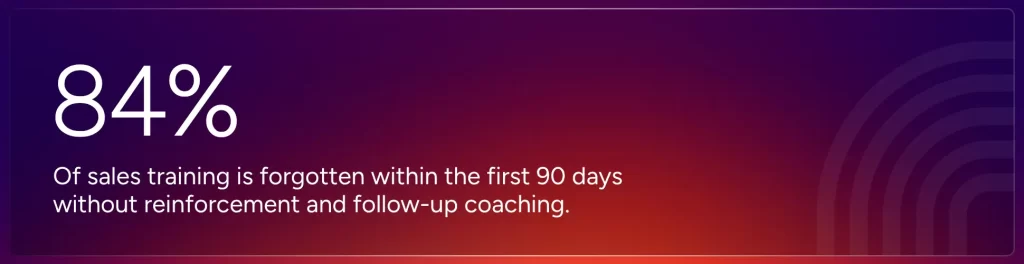
The top B2B firms winning in sales treat SDR training as an ongoing investment rather than a one-time onboarding exercise. They know the goal is not just to teach reps how to send emails or make calls, but to help them understand markets, buyers, messaging, and sales psychology.
The strongest sales development teams are usually deeply trained in:
Moreover, the training also evolves with the market. Buyer behavior changes, messaging fatigue increases, and outreach channels shift over time. The best companies continuously refine their playbooks so that SDRs stay relevant rather than relying on outdated scripts.
Over the years, one thing has become very clear to us: great SDR teams are rarely built through hiring alone. They are built through continuous learning, coaching, and consistent execution.
The Future of SDR Teams: AI + Human Execution
It is impossible to talk about modern sales without talking about AI. Over the last few years, AI has significantly changed how SDR teams operate, making outbound sales faster, more data-driven, and increasingly scalable.
But from what we’ve seen in real B2B sales environments, AI is not replacing SDRs. It is simply changing what great SDRs spend their time on. Here’s where AI is already making a major impact: