
Have you ever felt that you’re doing everything correctly but aren’t getting any responses?
You’re not alone.
After spending hours crafting customized emails, dialing numbers with intent, and sending LinkedIn messages, SDRs often face silence. Just noise, not rejection.
Why? Because prospects are overloaded.
According to Gartner, B2B buyers only spend 17% of their time meeting with potential suppliers. And with inboxes flooded and notifications non-stop, your message isn’t being ignored—it’s getting buried.
Today’s buyers are scattered: some live on LinkedIn, others screen calls, and many only skim emails during short windows. Relying on one channel? That’s a losing game.
This is where the modern SDR must evolve.
The days of hammering one channel are over.
Sales reps who understand the multi-channel outreach for lead generation —knowing when to engage, where to show up, and how to adjust across touchpoints—will now be the ones who succeed.
The Power of Multi-Channel Engagement
- Brands that engage customers across multiple platforms see a 287% increase in engagement.
- And 71% of consumers now expect to be contacted through the channel they prefer.
In other words, multichannel outreach is no longer an option. It gives you a competitive edge.
The goal of using multiple channels is not to send the maximum number of messages to prospects. It’s about being there when it makes sense, in the tone that they like, and where they are.
Multi-channel outreach for lead generation is effective because people are diverse. Some respond to a DM. Others prefer voicemail. Smart SDRs understand this and build sales cadence that adapt—not annoy.
A multichannel strategy addresses a core challenge in B2B sales: getting your message in front of the right decision-makers. Recruiters, marketers, and sales professionals all face the same reality—one channel is never enough.
What Is a Multichannel Outreach Strategy?
Multichannel outreach is more than just sending the same message to everyone; it’s the art of showing up where your prospects are already, in a way that feels natural, current, and personalized.
It’s a modern sales strategy that combines email, phone calls, LinkedIn, WhatsApp, SMS, and even direct mail into a unified approach. When done correctly, it not only reaches your prospects but also resonates with them.
This strategy helps SDRs:
- Connect more effectively
- Build familiarity faster
- Increase reply and meeting rates
In a world where attention is fragmented, multichannel outreach provides SDRs with an advantage: increased familiarity, visibility, and higher conversion rates.
The Anatomy of a Winning Multichannel Cadence
Let’s break down what a strong, multichannel cadence looks like:
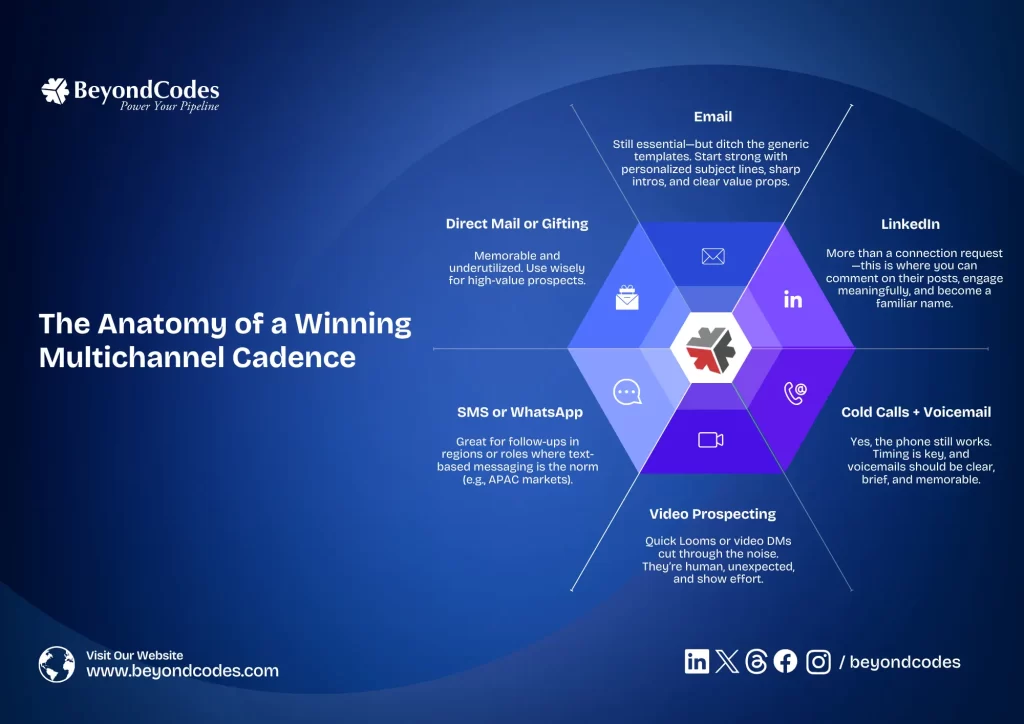
- Email Still essential—but ditch the generic templates. Start strong with personalized subject lines, sharp intros, and clear value props.
- LinkedIn More than a connection request—this is where you can comment on their posts, engage meaningfully, and become a familiar name.
- Cold Calls + Voicemail Yes, the phone still works. Timing is key, and voicemails should be clear, brief, and memorable.
- Video Prospecting Quick Looms or video DMs cut through the noise. They’re human, unexpected, and show effort.
- SMS or WhatsApp (when appropriate) Great for follow-ups in regions or roles where text-based messaging is the norm (e.g., APAC markets).
- Direct Mail or Gifting Memorable and underutilized. Use wisely for high-value prospects.
Click Here:- Mastering Cold Calling: Essential Techniques for SDRs
Why Multichannel Outreach Is a Must, Not an Option
Let’s face it—buyers are bombarded with generic pitches every single day. Your prospect likely receives 50+ sales messages daily. Inboxes are overflowing. Calls go unanswered. DMs sit unread.
So, how do you cut through the noise? Here are the effective ways—
1. You appear consistently and contextually across platforms
A McKinsey study revealed that companies using 4+ channels in their outreach experience 3x higher response rates than those using just one. That’s not a nice-to-have stat; that’s a wake-up call.
Think of it this way:
If your prospect doesn’t respond to your email, maybe they’ll respond to a thoughtful LinkedIn message. If they ignore your DM, maybe a well-placed voicemail sparks their interest. Multichannel is about meeting your buyer where they are—not where you prefer to be.
2. Creating a Cohesive Multi-Channel Sequence
Multichannel doesn’t mean hitting your prospect every hour. It’s about timing, relevance, and flow to space out your touches intelligently.
Here’s a sample 10-day flow to show how it all fits:
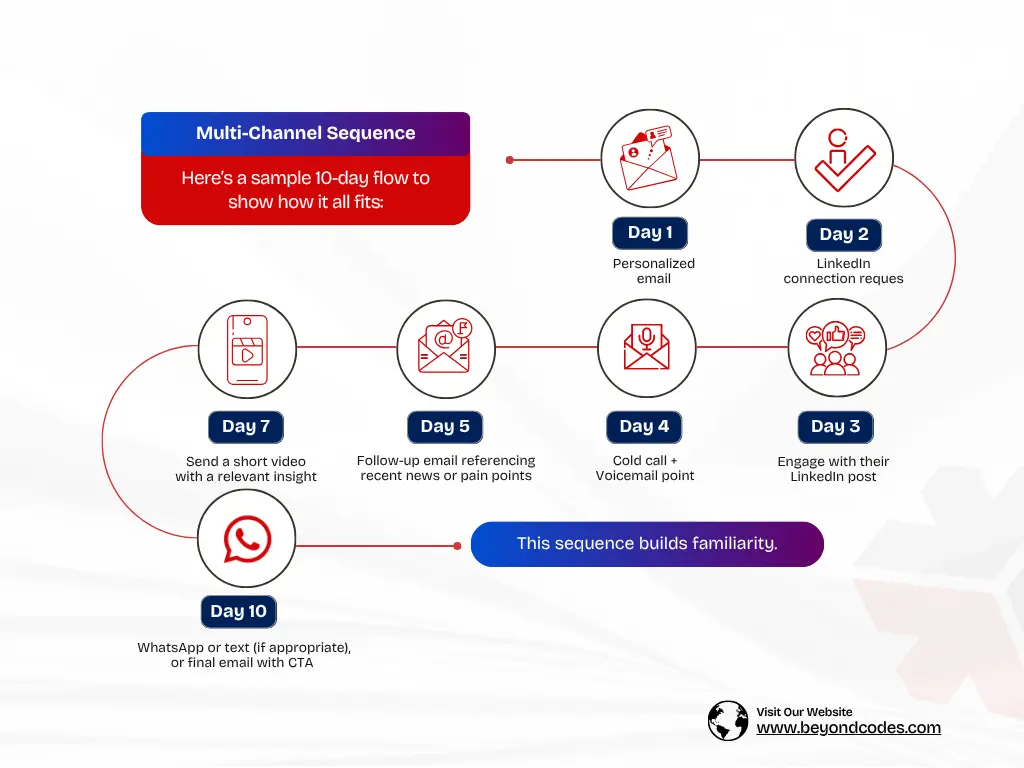
This sequence builds familiarity. Each touchpoint adds context and makes the next one feel more natural.
3. Identify the Right Channels for Your Audience
The best channel is the one your prospect actually uses. SDRs need to act like detectives—spotting behavioral cues, communication habits, and industry norms. Here’s what SDRs must analyze:

- C-level executives might skip cold calls but respond to sharp LinkedIn messages
- Mid-level managers may prefer phone conversations
- Some industries engage better through Slack communities or even direct mail
- A few niche buyers respond surprisingly well to direct mail or voice notes
Use your CRM insights—track open rates, call outcomes, and replies. Then adapt your outreach based on what actually works.
Click Here:- How to Nail the First 30 Seconds of Every Sales Call
4. Personalizing Your Message by Platform
Every platform speaks a different language. Great SDRs become fluent in all of them:
- Emails are structured, customized, and value-driven.
- LinkedIn DMs should be conversational, relevant, and brief.
- Cold calls require sharp introductions and confident tonality.
- Video works best when it’s customized as per brand voice and prospect’s pain points.
Pro Tip: Never copy-paste the exact message across all platforms. Reference your previous touchpoints to keep the conversation flowing.
Example:
“Hey Alex, just sent a quick email yesterday—thought I’d drop a note here too since I saw you’re active on LinkedIn.”
You can even utilize tools like ChatGPT to craft more effective copy, refine tone, or tailor messages to each channel. Just remember: AI just helps scale your effort—it’s your authenticity that closes the deal.
Metrics That Matter: How to Track Multichannel Success
Sending messages across channels is just the start. If you’re not measuring the right numbers, you won’t know what’s actually working. Instead of only tracking email open rates (which can be misleading), focus on these metrics:
Touchpoint-to-Meeting Conversion Rate
This indicates the number of touches (emails, calls, messages) required to schedule a meeting. If it takes 12 touchpoints to get 1 call, that’s your benchmark—and your improvement point.
Reply Rates Across Channels
Track where people are actually responding. Are your LinkedIn messages getting more replies than emails? Are cold calls leading to callbacks? This helps you shift focus to the most effective channels.
Time-to-Engagement
How long does it take a lead to respond after your first outreach? The shorter the time, the warmer your messaging likely is. Tracking this helps you spot which sequences spark quicker interest.
Channel Attribution
Know which channel actually closed the deal. Even if your email started the conversation, it could be the call that sealed the meeting. Give credit to the channel that made the most significant impact.
Over time, these metrics will help you refine your sales cadence, double down on high-converting channels, and eliminate those that no longer serve.
Common Challenges and How to Counter Them
“I don’t have time to manage multiple channels.”
It can feel overwhelming, but you don’t need to be everywhere all the time. Use tools like Outreach, Salesloft, or HubSpot to schedule your touches in advance. And just block 1 hour daily for LinkedIn—it adds up. Consistency beats intensity in outbound.
“I’m not sure how to personalize across every channel.”
You don’t need new research for every platform. Just pick 2–3 strong signals—like a company announcement, a job change, or a mutual connection—and customize those insights creatively in each message.
“I feel awkward sending videos or voice notes.”
That’s actually your advantage. Most people feel the same way—so they avoid it. But because so few are doing it, your message will instantly stand out and feel more personal.
Final Thought: The SDR Who Adapts, Wins
Mastering multichannel outreach is no longer optional—it’s your survival kit.
Every prospect you want to talk to is busy, distracted, and bombarded with information. But they’re also reachable—if you show up in the right place, with the right message, at the right time.
That’s your job now as an SDR: orchestrate, not spam. Build a journey, not a campaign.
And, in that noise-filled world, the SDR who adapts to where the buyer is is the one who doesn’t just survive—but win.
Ready to Master Multi-Channel Outreach and Book More Meetings?
Author
-
With 7+ years of experience and a background in media & communication, she brings stories to life that fuel lead generation success. She transforms complex B2B ideas into content that is clear, engaging, and results-driven—helping key decision-makers take action. A good cup of coffee fuels her writing ideas, and when off the clock, she enjoys unwinding with her dog by her side.