
Summary
Cold email campaigns are just as relevant today as they were a decade ago. The only thing that has changed is the approach behind them. Modern B2B cold emails are no longer about reaching a large database and hoping a few will respond. B2B sales have become far more complex; buyers are only interested in conversations that feel relevant to their needs.
This is why dynamic lead generation companies are building cold email marketing strategies that are more personalized, ICP-led, and problem-focused. Because if your emails sound just like the same copy-paste templates everyone else is sending, creating genuine opportunities through cold outreach becomes much harder.
Introduction
Your cold email is no longer competing against other sales emails. It’s competing against your prospect’s time and attention.
This is the reason why traditional cold email tactics no longer work in B2B sales. Buyers across the enterprise sales cycle receive countless cold emails daily, making it harder for businesses to stand out with mass emails and generic messaging.
Modern B2B cold email best practices are built around personalization, relevance, timing, and meaningful relationships. Technology companies focusing on buyer intent and value-driven messaging are generating better engagement than businesses relying on aggressive selling.
This blog explores what makes cold email outreach effective today, common mistakes businesses make, and strategies to improve open and response rates, as well as overall B2B sales conversations.
What Makes B2B Cold Emails Different Today?
Not too long ago, cold emails across B2B lead generation campaigns were mostly fueled by volume. Companies would send hundreds or even thousands of emails, hoping a small percentage would respond. While that approach worked before, modern buyers are far more selective about the emails they open and further engage with.
Successful cold email marketing strategies ensure the campaign is ICP-led, the messaging is prospect-friendly, and it reaches them at the right time. These factors are crucial because buyers now want strategic partners whose focus is not on selling but on helping them solve their immediate business challenges.
This shift in mindset among enterprise sales buyers has changed how companies approach email lead generation. Cold emails today are not immediately pitching products or services; they aim to start conversations, build relationships, and create relevance for prospects.
Common Cold Email Mistakes That Hurt Response Rates
You might think a strong product and an experienced sales team are all you need to get more opens, clicks, and email responses. Well, frankly, we have seen businesses with top solutions struggle with cold email outreach because of the tiny mistakes they keep making.
Here are some of these cold email mistakes you might want to avoid in your next B2B email marketing campaign.
1. Writing Generic Subject Lines
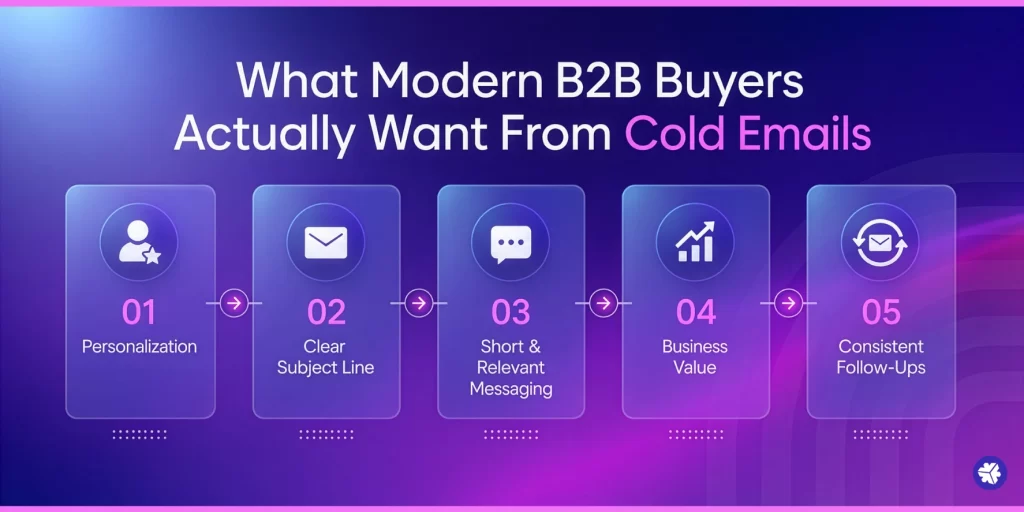
Your subject line is the first hook of a cold email. It will decide whether the email gets opened and engaged with, or lost in the pile. Generic pitches like “quick introduction” or “business opportunity” are generally the first to be ignored because they fail to build curiosity and value.
Strong cold email subject line best practices focus on not trying too hard, keeping the content simple, making it pertinent to the prospect’s needs, and keeping it non-promotional.
2. Sending Long, Overwhelming Emails
Remember, in a B2B environment, you are often pitching to the COO, CRO, CGO, CTO, and other top decision-makers. It means they don’t have the time to read long sales emails with your business’s information or lengthy, confusing product details.
Cold emails that do get better engagement in terms of open and response rates are usually short, conversational, and focused on a single value proposition.
3. Pitching Too Early
Sales in B2B is a waiting game, and one of the biggest mistakes companies make with sales email outreach is trying to sell within the first few lines. Instead, key influencers and decision-makers expect to understand context and gain genuine business insights first.
Your goal should always be to start a conversation and talk to them about their challenges, rather than trying to build your sales pipeline or close deals.
4. Poor Personalization
Adding a first-name token to the subject line or the first line of the email is no longer personalization. Buyers, through your emails, will realize how well you actually know them, their business, and what they might need.
This is why your priority should be building hyper-personalized email drafts that achieve a higher percentage of opens and responses.
5. Ignoring Follow-Ups
Consistent follow-ups are as important as starting the cold email campaigns. Many sales opportunities are lost because teams give up after one email. Sometimes buyers simply take longer to respond in the B2B landscape, and they might need a gentle reminder.
Multiple sales engagement studies show that follow-up emails can significantly improve response rates compared to single-touch outreach.
What Are the Best Practices for Cold Email in B2B?
Here are some of the most effective practices businesses use to improve cold email open rates and response rates in modern B2B sales environments.
1. Focus on One Clear Objective Per Email
Many lead generation teams try to include too much information in a single email. They would have drafts filled with services, offerings, why choose us, and more, which, for a cold email, is just content your prospects hardly sweat over.
But the moment your email focuses on a single topic, challenge, or insight, it feels more directional and logical to someone reading it for the first time. And that’s exactly how you win. Through simple emails with a simple message.
2. Always Keep the Tone Conversational
Your overly edited and formal sales pitches are no longer getting through to genuinely interested prospects. They expect their emails and conversations to sound more human, free of jargon and repeated templates, which only makes it easier for them to ignore your cold outreach.
The best practice you can follow is keeping the tone light, authentic, honest, and, most importantly, relatable. These kinds of messages are easy to resonate with and are always more likely to spark a conversation.
3. Go All-In with Personalization
The best way to beat your competitors and be seen by your potential buyers is to know them, and I mean really know them. Don’t think adding their name or designation across the content is personalization. We know it isn’t, and so do they.
What you need to do is understand everything there is to know about them, and then build your pitch around how you fit in, rather than the other way around. Even the smallest personalization can make a difference in the open rate and, eventually, the response rate.
4. Take Time Writing the Subject Lines
Many high-performing B2B sales teams avoid over-optimized subject lines because they immediately look automated or promotional. Shorter, well-thought-out subject lines with a conversational tone often perform better in enterprise outreach environments.
Some messaging you could go for includes a simple business-related question, a reference to a common challenge of theirs, or an industry trigger. Either way, the goal is not to sell with subject lines but to grab attention.
5. Continuously Test and Optimize Campaign
Successful cold email marketing campaigns are rarely static. Businesses generating strong open and response rates keep on testing subject lines, messaging styles, email timing, personalization formats, and follow-up structures.
These little regular improvements in messaging or targeting can impact overall engagement and help improve long-term email performance. So, don’t be afraid to try a little and optimize your campaign, because that’s how outreach performance improves over time.
Also Read, Cold Emails That Get Responses: B2B Lead Generation Techniques That Work Now
How to Improve Cold Email Open Rates and Responses
Even well-written cold emails can fail if prospects never open them in the first place. Here are some practical ways businesses improve engagement across modern cold email campaigns:
| Strategy | Why It Improves Engagement |
|---|---|
| Personalize the first two lines | Personalizing the very first lines helps buyers decide whether the rest of the email is relevant to them. |
| Keep subject lines short | Many businesses see higher engagement when subject lines feel simple and conversational rather than promotional. |
| Send emails at the right time | Many sales teams test different days and time slots to understand when prospects are most responsive. |
| Avoid large blocks of text | Emails with shorter paragraphs and cleaner formatting are easier to read quickly. |
| Use structured follow-ups | Follow-up emails improve response rates because buyers are often busy during the first outreach attempt. |
Conclusion
Cold email marketing is no longer about sending bulk outreach and hoping for replies. Businesses that follow strong B2B cold email best practices are building better relationships and fostering meaningful engagement with the right audience.
The reality is that buyers today can instantly recognize whether an email was written for them or simply copied to them. That’s why businesses investing in thoughtful messaging, genuine personalization, and strategic follow-ups are seeing stronger conversations and more genuine opportunities over time.